Sliding or swinging doors: which to choose?
When choosing the finishes for a home or development, every detail directly influences the project's final result. Among these decisions, choosing between a sliding door and a swinging door often raises questions.
Although both serve the same primary function — dividing spaces and providing privacy — each model has specific characteristics that impact circulation, space optimization, aesthetics, and even construction costs.
There is no universal answer to the question "which is better?". The ideal choice depends on the room's needs, the architectural concept, and the experience you want to provide for users.
In this article, you will learn the main differences between these two systems, their advantages, limitations, and the factors you should consider before making this decision.
Understanding the function of each type of door
Before comparing advantages and disadvantages, it is important to understand how each model works.
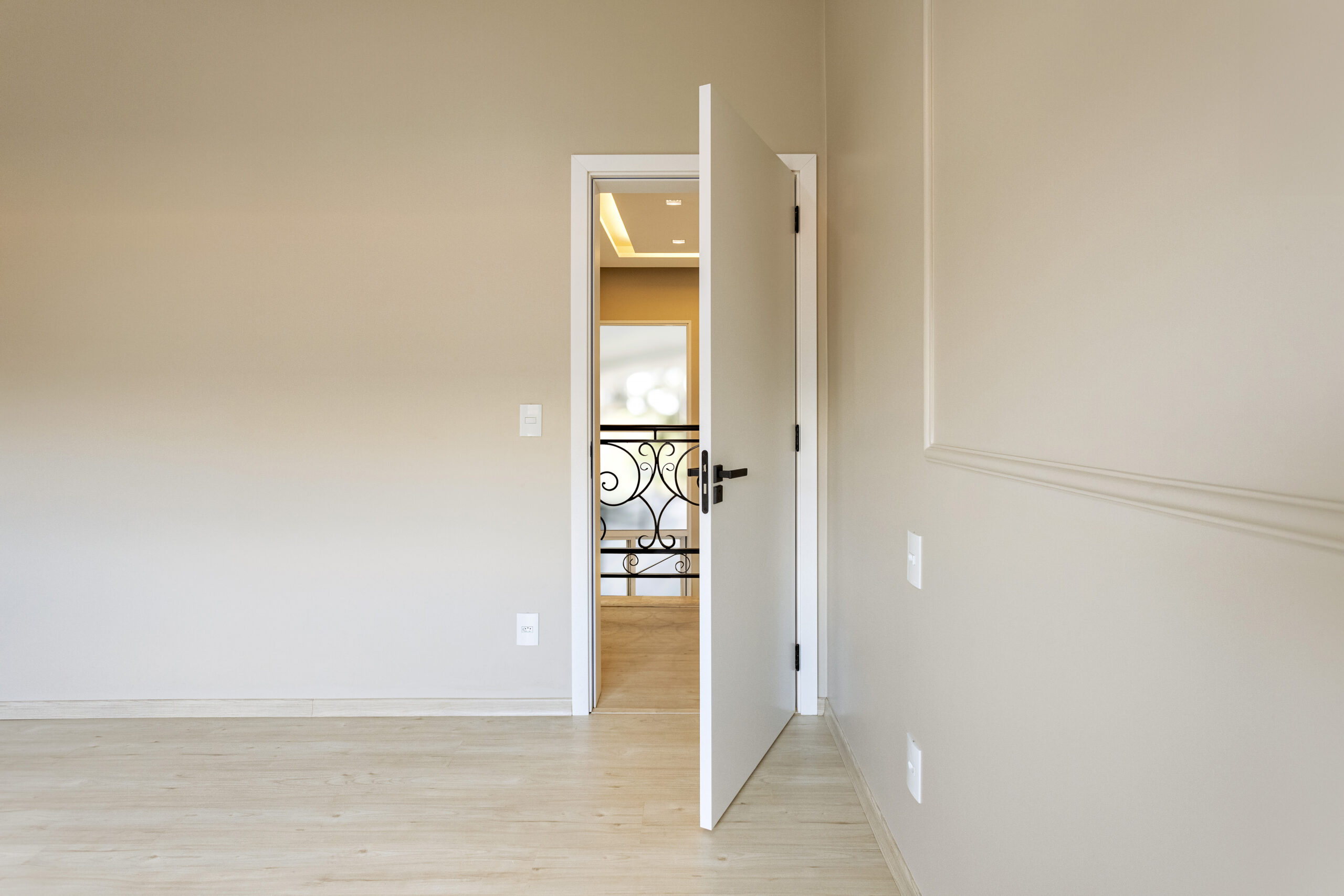
Swinging door
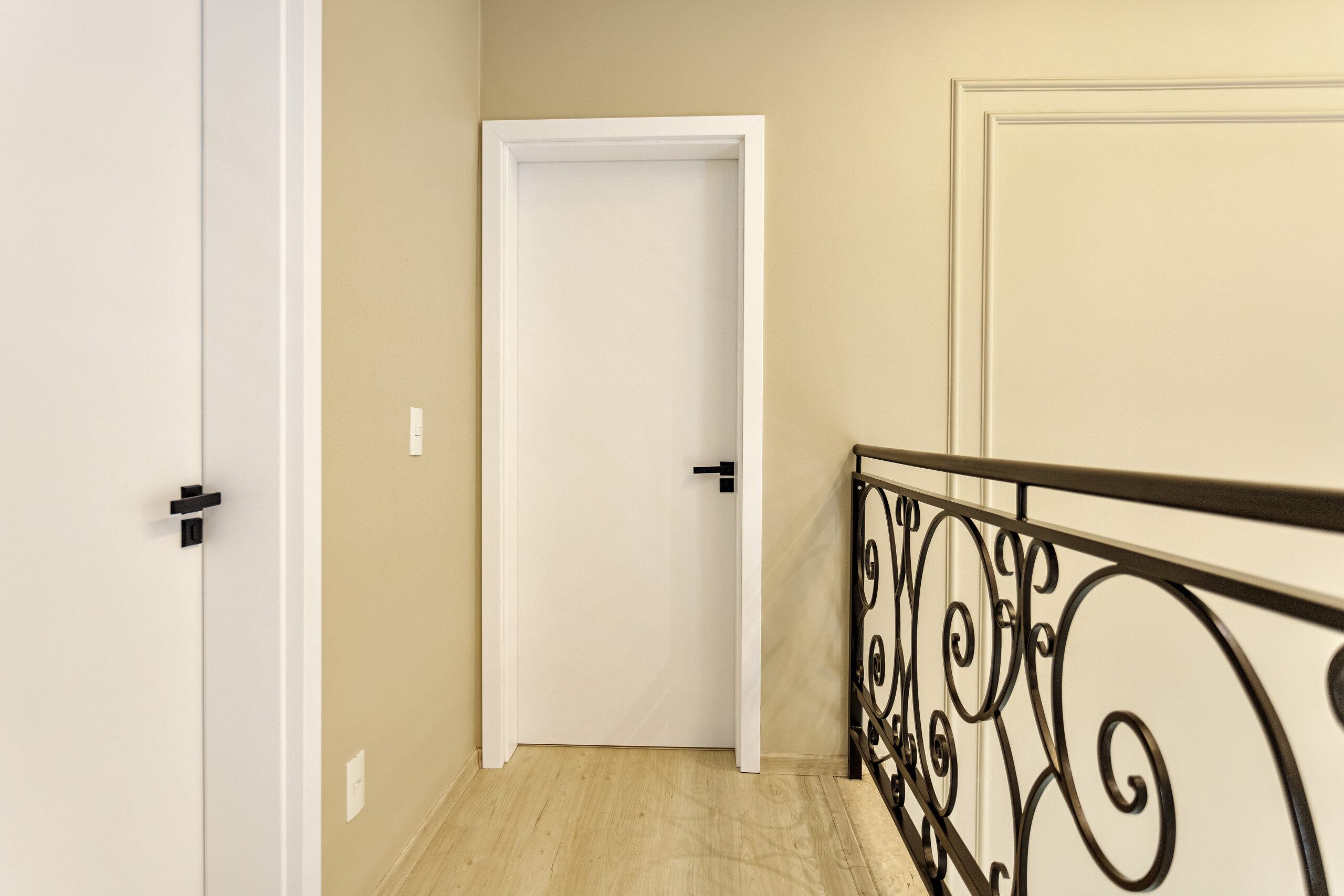
It is the most traditional system used in civil construction.
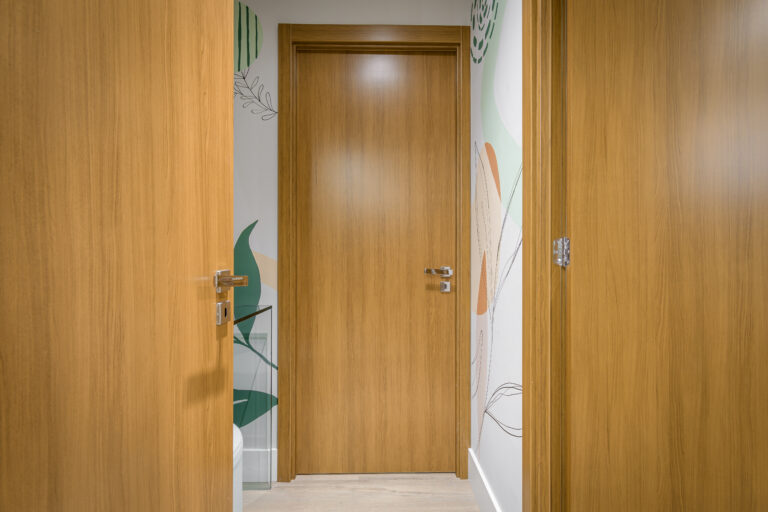
It opens via hinges attached to the frame, allowing the door leaf to swing inwards or outwards.
This model is known for its simplicity, ease of installation, and excellent sealing.
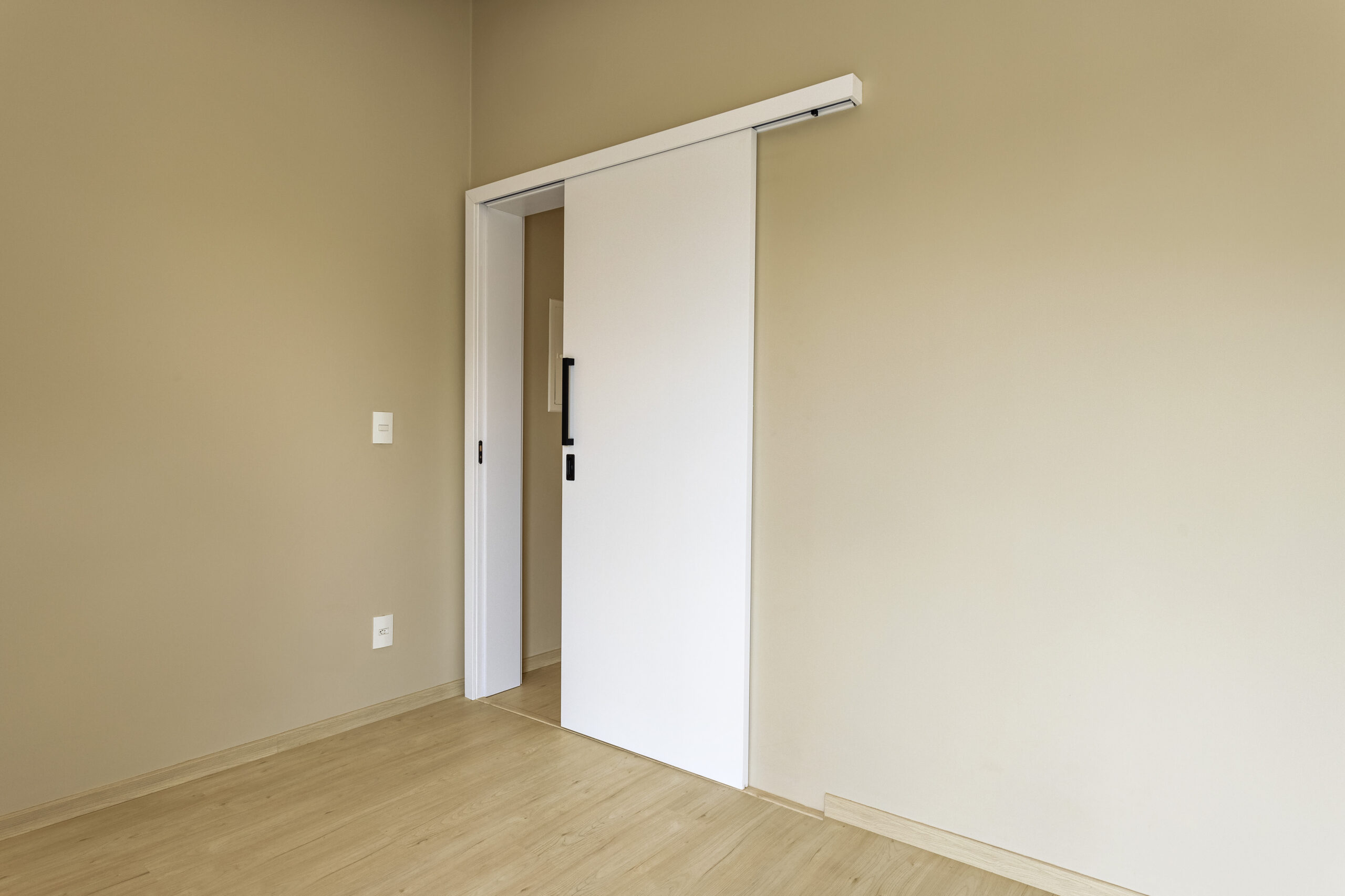
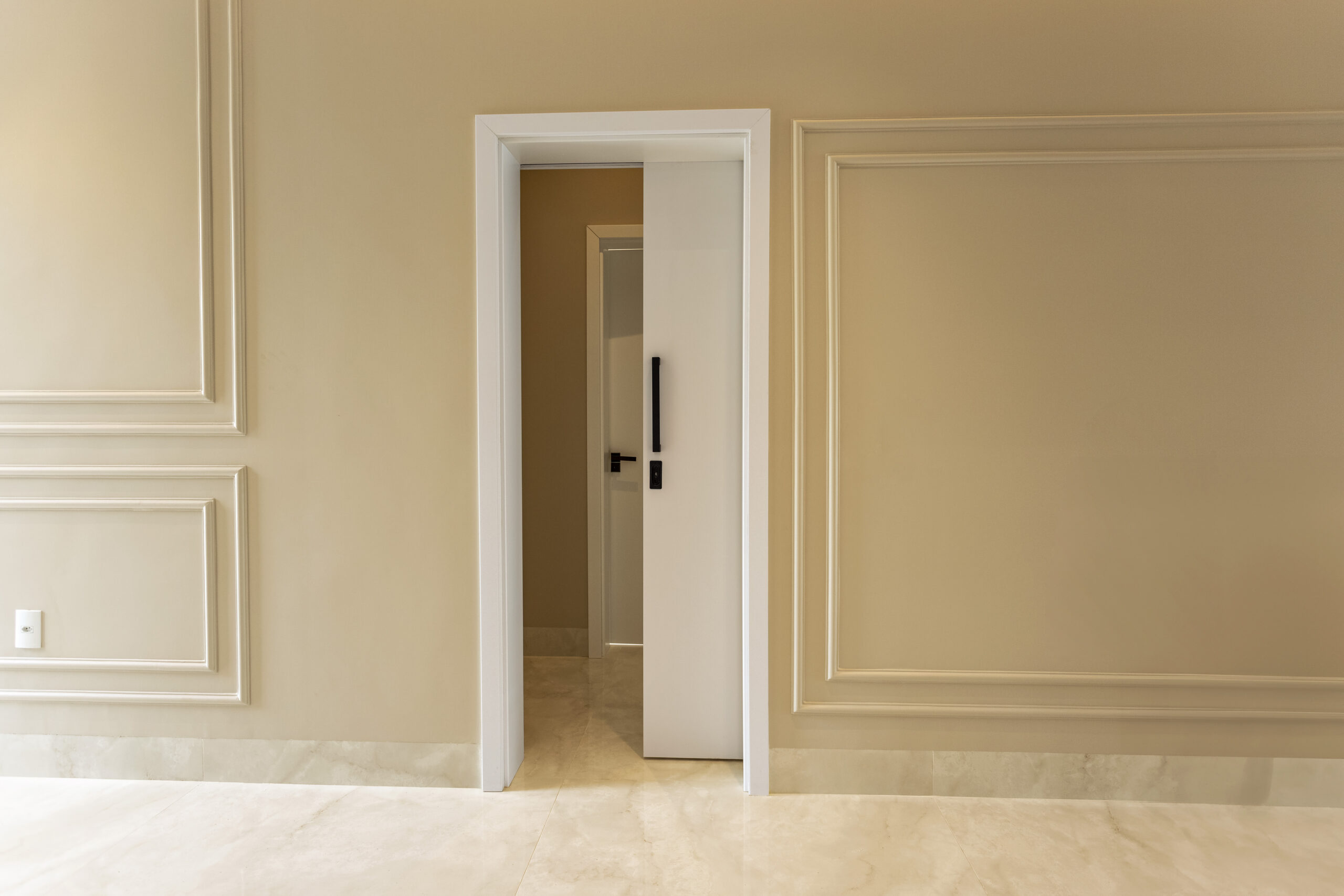
Sliding door
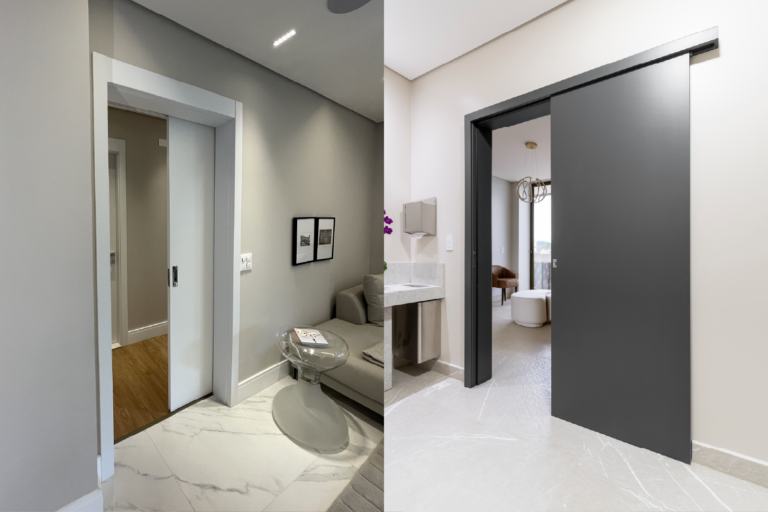
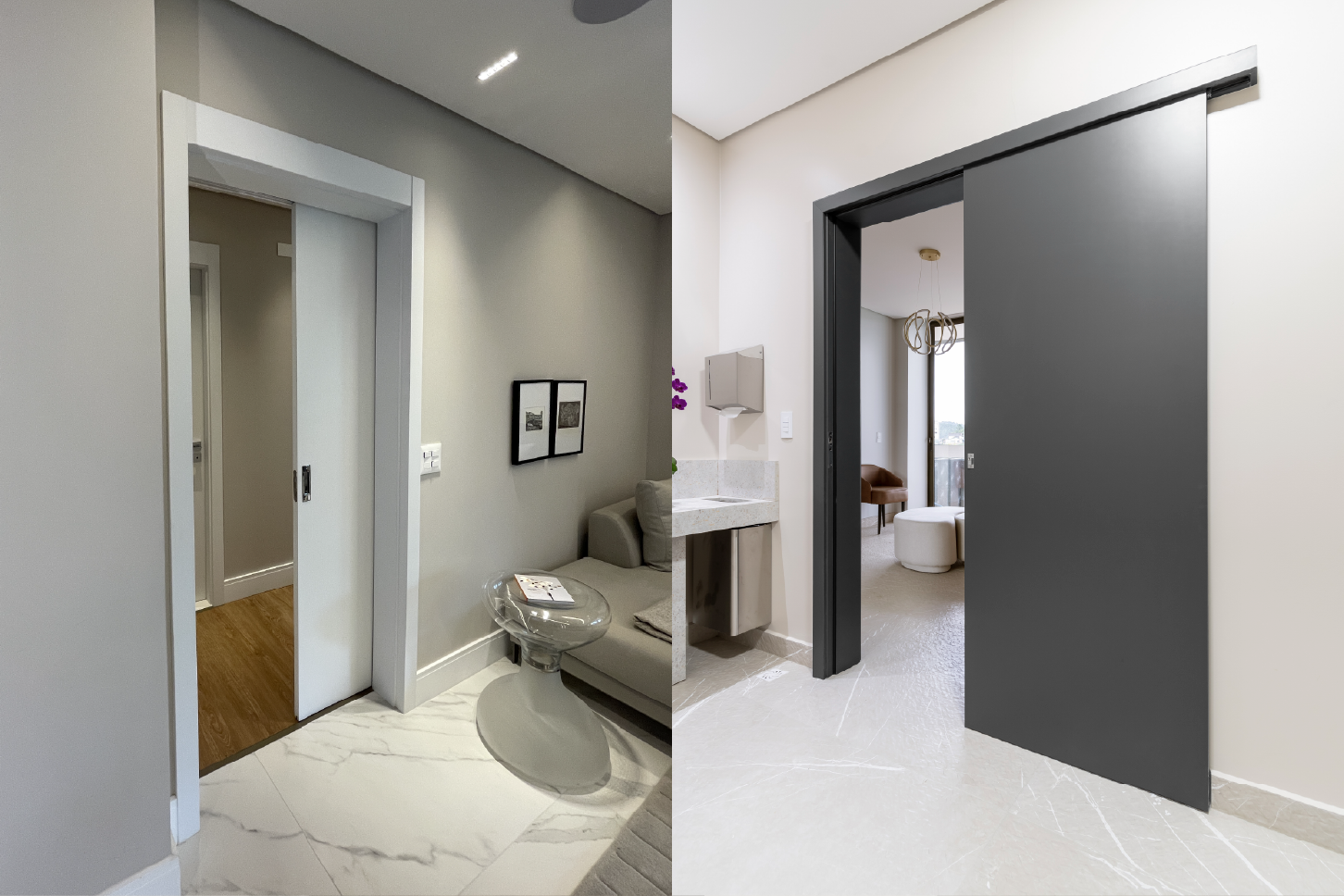
In this system, the door leaf slides horizontally on specific tracks and hardware.
Depending on the project, it can slide parallel to the wall or be pocketed inside a panel or drywall.
Its main advantage lies in space-saving and its contemporary look.
When to choose a swinging door?
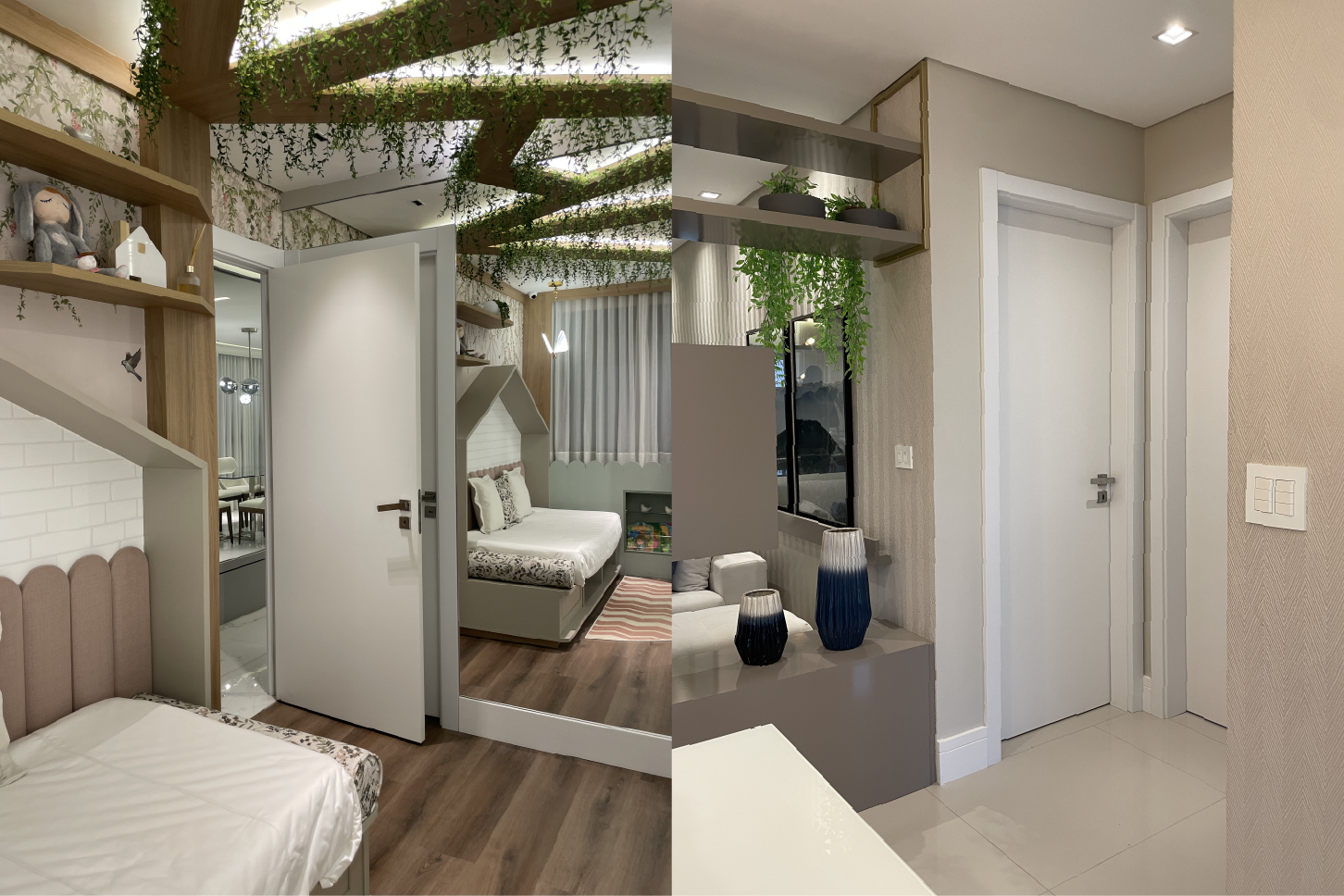
Swinging doors remain the most widely used in residential and corporate projects.
This happens because they offer several practical advantages.
1. Better sealing
Because the door leaf rests directly against the jamb, this system provides better acoustic sealing and greater control over airflow.
This benefit is especially important in:
- bedrooms;
- offices;
- clinics;
- meeting rooms.
The better the seal, the greater the comfort provided to the room.
2. Wider variety of models
The market offers an enormous diversity of swinging doors.
You can find:
- flush;
- grooved;
- lacquered;
- with glass panels (vision panels);
- with different finishing patterns.
This variety makes it easy to integrate with any architectural proposal.
3. Simplified installation
Another positive point is the ease of installation.
Since it uses a highly established system in civil construction, it usually requires fewer adjustments and less maintenance.
Furthermore, industrialized solutions, such as ready-made door kits, significantly reduce the project's execution time.
4. Excellent cost-benefit ratio
In most cases, a swinging door requires a lower initial investment compared to sliding doors.
This occurs because it uses simpler hardware and a widely spread construction system.
When to choose a sliding door?
Sliding doors have gained prominence in recent years, especially in contemporary projects.
Its main characteristic is optimizing the use of space.
1. Better use of usable area
Because it does not need swing space, it allows for a more efficient layout.
This feature makes all the difference in compact rooms.
Among them:
- apartments;
- powder rooms (half baths);
- closets;
- kitchens;
- laundry rooms;
- small offices.
Every square meter can be better utilized.
2. Integration of spaces
Another advantage is the possibility of integrating spaces.
When open, it practically disappears from the composition, providing a greater sense of spaciousness.
It is widely used to integrate:
- living room and balcony;
- kitchen and gourmet area;
- dining room;
- home office.
This solution creates more fluid and functional spaces.
3. Contemporary design
Sliding doors convey a modern and sophisticated feel.
They are often used in minimalist projects, where the goal is to reduce visual interference.
Depending on the chosen finish, it becomes a true decorative element.
Are there any disadvantages?
Every system has limitations.
Knowing them prevents poor choices.
Swinging door
Among its main points of attention are:
- requires space to open;
- interferes with furniture placement;
- demands layout planning.
Sliding door
On the other hand, this system may present:
- inferior acoustic sealing in some models;
- more complex hardware;
- installation that requires greater precision;
These factors are not a problem, as long as they are considered during the design phase.
The impact of the choice on architecture
A door influences much more than just circulation.
It also participates in the room's visual identity.
Architects usually analyze several factors before specifying, such as:
- flow of people;
- lighting;
- comfort;
- furniture;
- integration of spaces;
- architectural language.
Therefore, the decision is rarely based solely on aesthetics.
It is the overall solution that determines the best choice.
How to choose the best option?
Some questions help a lot during the specification process.
What is the size of the room?
Small spaces usually benefit from sliding doors.
Larger rooms offer the freedom to use either system.
Is there a need for acoustic insulation?
If this feature is a priority, swinging doors usually perform better.
What is the style of the project?
Classic projects usually use swinging doors.
Contemporary projects heavily explore the potential of sliding doors.
However, this is not a rule.
Currently, there are solutions capable of combining technology, elegance, and performance in both systems.
Is the construction schedule tight?
In this scenario, industrialized solutions offer a great advantage.
Products designed for quick installation reduce rework and increase the team's productivity.
The role of quality in the choice
Regardless of the chosen system, the door's quality makes all the difference.
A well-made door offers:
- better finishing;
- greater stability;
- superior durability;
- smooth operation;
- security;
- less need for maintenance.
Therefore, besides the model, it is crucial to evaluate the manufacturer and their ability to deliver reliable solutions.
How Sincol contributes to more efficient projects
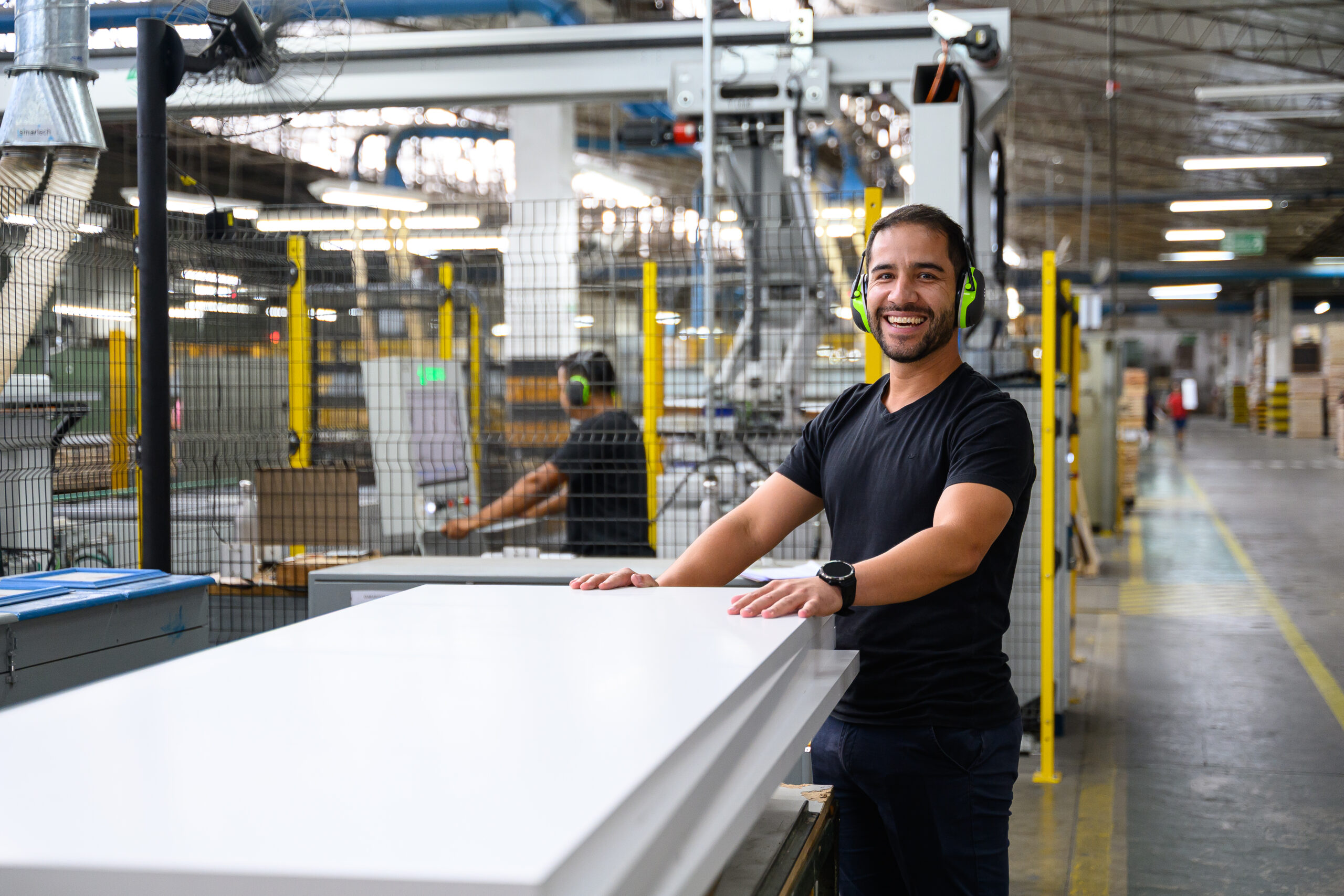
Throughout its history, Sincol has developed solutions aimed at meeting the needs of modern civil construction.
More than just manufacturing doors, the company continuously invests in technology, industrial processes, and innovation to offer products that combine performance, practicality, and an excellent finish.
Among these solutions is the Sinkit Porta Pronta, designed to simplify installation, reduce waste, and increase productivity on construction sites.
This concept provides significant benefits for builders, architects, engineers, and consumers, ensuring greater standardization and efficiency during project execution.
Regardless of whether the choice is a swinging door or another solution applied to the project, opting for high-quality products represents an investment in durability, functionality, and property value.
Conclusion
The choice between sliding doors and swinging doors does not depend solely on aesthetic preference.
Each system offers specific advantages and can contribute differently to the comfort, functionality, and value of the rooms.
While swinging doors remain the benchmark for sealing, practicality, and cost-effectiveness, sliding doors are gaining ground for layout optimization and space integration.
When this decision is made with planning and using quality products, the result is a more efficient, beautiful, and durable project.
If you are looking for solutions that combine innovation, a superior finish, and efficiency for different types of construction, discover Sincol's portfolio and see how choosing the right door can transform the experience of every space.